
If you’ve ever asked yourself, “what size crate do I need for a Labrador Retriever?” you’re not alone. Choosing the right crate size is one of the most important decisions every Lab owner makes – whether for a playful puppy, a fully grown adult, or a senior companion.
In this guide, we’ll break down everything you need to know about Labrador crate sizing, including how to measure your dog, recommended crate dimensions for puppies and adults, types of crates available, and expert tips for training and travel. By the end, you’ll know exactly what size crate you need for your Labrador Retriever.
Ideal Crate Size for a Labrador Retriever
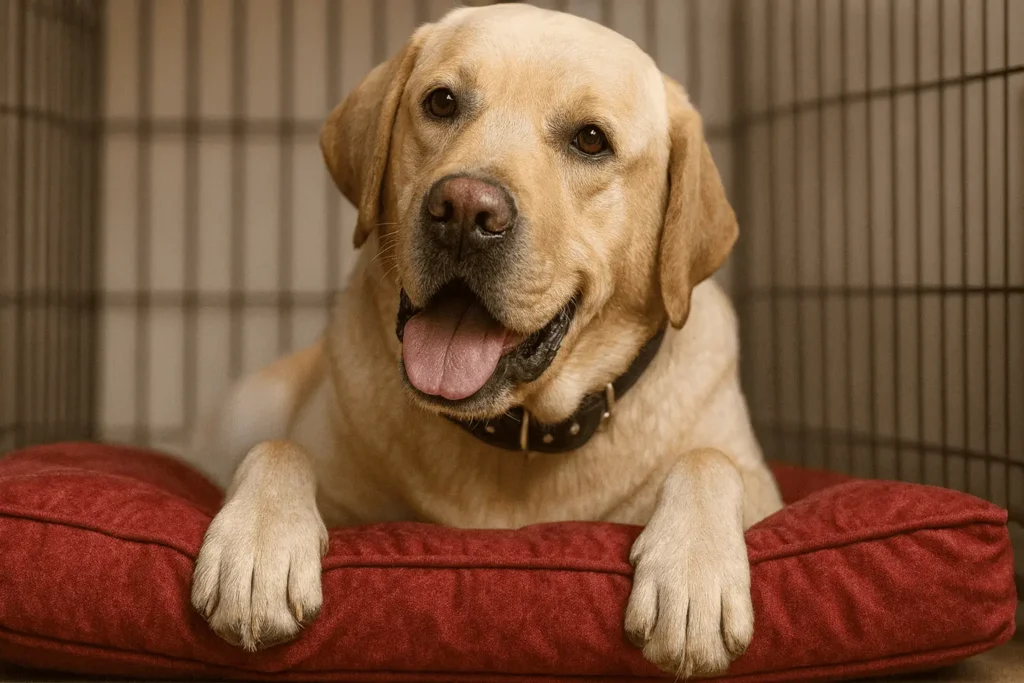
When it comes to finding the ideal crate size for a Labrador Retriever, comfort and safety go hand in hand. Labradors are medium-to-large dogs with strong builds and lots of energy, so they need enough space to stand up, turn around, and lie down comfortably – without feeling cramped or lost inside.
Recommended Crate Dimensions
For most adult Labradors, the recommended crate size is 42 inches (length) x 28 inches (width) x 30 inches (height). This size provides enough room for an average adult Lab, which typically weighs between 55 – 80 pounds and stands 21.5 – 24.5 inches tall at the shoulder.
Crate Door Size and Design for Labrador Retrievers
A full-grown Labrador Retriever (standing 21 – 24 inches tall) needs a crate door at least 20 – 22 inches high for easy entry and exit without crouching or bumping their head. If you’re buying a 42 inch or 48 inch crate, make sure the door height is proportionate – large enough for natural movement.
Standard Crate Sizes for Labrador Retrievers in Market
| Crate Size (Length) | Approx. Dimensions (L × W × H) | Best For |
|---|---|---|
| 36″ – Medium-Large | 36″ × 24″ × 27″ | Smaller or lighter Labradors, or young adults |
| 42″ – Large | 42″ × 28″ × 30″ | Most adult Labrador Retrievers |
| 48″ – Extra-Large | 48″ × 30″ × 32″ | Larger male Labradors or heavier-built Labs |
Although most Labrador crates follow standard dimensions, there are a few exceptions:
- Custom-made or furniture-style crates: Some owners choose decorative wooden crates designed to match home interiors, which may have unique dimensions.
- Travel crates: Airline-approved or car crates often have non-standard proportions to meet transport and safety requirements.
- Adjustable crates with dividers: Many wire crates include dividers that let you adjust the internal space as your Labrador grows.
While standard sizes work perfectly for most Labradors, measuring your dog first ensures the best fit — whether you opt for a regular model or a custom design.
How to Measure Your Labrador for the Perfect Fit
- Measure the Length:
Have your Labrador stand on all fours. Measure from the tip of their nose to the base of their tail (not the tail tip). Add 4–6 inches for comfort. - Measure the Height:
While your Lab is sitting, measure from the floor to the top of their head or ears, whichever is higher. Add another 4 inches to determine the ideal height. - Check the Fit:
Once inside, your Labrador should be able to stand up straight, turn around, and lie down without touching the sides or top of the crate
If your Lab happens to fall between two sizes, it’s usually safest to choose the larger crate, ensuring your dog has enough room to stand, turn around, and rest comfortably.
Crate Size for Different Life Stages

When deciding what size crate you need for a Labrador Retriever, one key factor to consider is your dog’s age and life stage. Labrador Retrievers grow rapidly from small, clumsy puppies into strong, full-sized adults – and their crate needs change along the way.
Crate Size for Labrador Puppies
Labrador puppies grow fast – sometimes doubling in size within a few months! Buying multiple crates for each growth stage can be expensive, so the smart option is to buy a full-size crate (42 inches) early on and use a divider panel to adjust the space as your puppy grows.
Recommended Size:
- Full-size crate: 42 inches (with divider panel)
- Divider allows you to start small and expand the space gradually.
Devider is essential because too much space can encourage them to use one end as a bathroom.
Pro Tip: Start with enough room for your puppy to stand, turn, and lie down – no extra space needed yet. Increase space every few weeks as your Lab grows.
Crate Size for Senior Labradors

As Labradors age, they become less active and may experience joint stiffness or mobility issues. Senior Labs benefit from a slightly larger or more accessible crate to help them move comfortably.
Recommended Size:
- 42–48 inches, depending on mobility needs.
- Low-step entry or crate with wide door openings.
Pro Tip: Avoid crates with high thresholds – senior Labs may find it difficult to step in and out due to arthritis or hip dysplasia.
For Pregnant or Lactating Labradors
Pregnant or nursing Labradors need more space for rest, movement, and puppies. The crate should be larger and lined with soft, clean bedding to keep the mother comfortable and the pups safe.
Recommended Size:
- 48-inch crate or larger, depending on litter size.
- Keep it well-ventilated and easy to clean.
Crate Size for Sick or Disabled Labradors
For most disabled or recovering Labradors, the standard size (42–48 inches) still applies. You don’t usually need a bigger crate – but you must ensure easier entry and exit.
Tips
- Choose a crate with a low threshold or wide front door so your Lab can walk or crawl in comfortably.
- For dogs with limited mobility or arthritis, consider side-opening doors or double doors for better access.
If your Labrador has a mobility issue, injury, or paralysis, you may need a slightly larger crate (up to 48 inches) to accommodate:
- Supportive bedding or orthopedic mattresses
- Medical aids (like slings, bandages, or wheel attachments)
- Extra room to change positions comfortably
Crate Size for Female Labradors
Female Labradors generally weigh 55–70 pounds and are slightly shorter, around 21.5–23.5 inches tall. Their smaller frame means they’re comfortable in a 40–42 inch crate in most cases.
Recommended Crate Size for Female Labradors:
- 40-inch crate: perfect for smaller females or petite body types.
- 42-inch crate: great for average-sized adult females – gives room without feeling oversized.
Crate Size Differences by Labrador Retriever Line

English (Show) Labrador Retriever
- 42-inch crate fits most adult English Labradors comfortably.
- Some smaller females may fit well in a 40-inch crate.
American (Field) Labrador Retriever
- 42-inch crate works for most, but
- 48-inch crate may be better for taller or longer males.
Mixed or “Hybrid” Labrador Lines
Many Labradors today are a blend of English and American lines, especially family pets.
Their build can vary depending on their lineage, so it’s best to measure your individual dog rather than rely on averages.
Crate Types Suitable for Labradors
Once you’ve figured out what size crate you need for your Labrador Retriever, the next step is choosing the right type of crate. Below are the most common crate types that work best for Labradors, along with their pros and ideal uses.
Wire Crates
Wire dog crates are one of the most popular choices for Labrador Retrievers.
They offer excellent ventilation, visibility, and durability – perfect for keeping your Lab cool and comfortable indoors.
Advantages:
- Great airflow for Labradors (who can overheat easily).
- Foldable for easy storage and portability.
- Usually come with divider panels, so you can adjust the space as your puppy grows.
- Easy to clean – just remove the tray and wipe down.
Best for: Home use, puppy training, and crate training in general. Choose a heavy-duty wire crate if your Labrador tends to chew or push boundaries.
Plastic (Airline-Approved) Crates
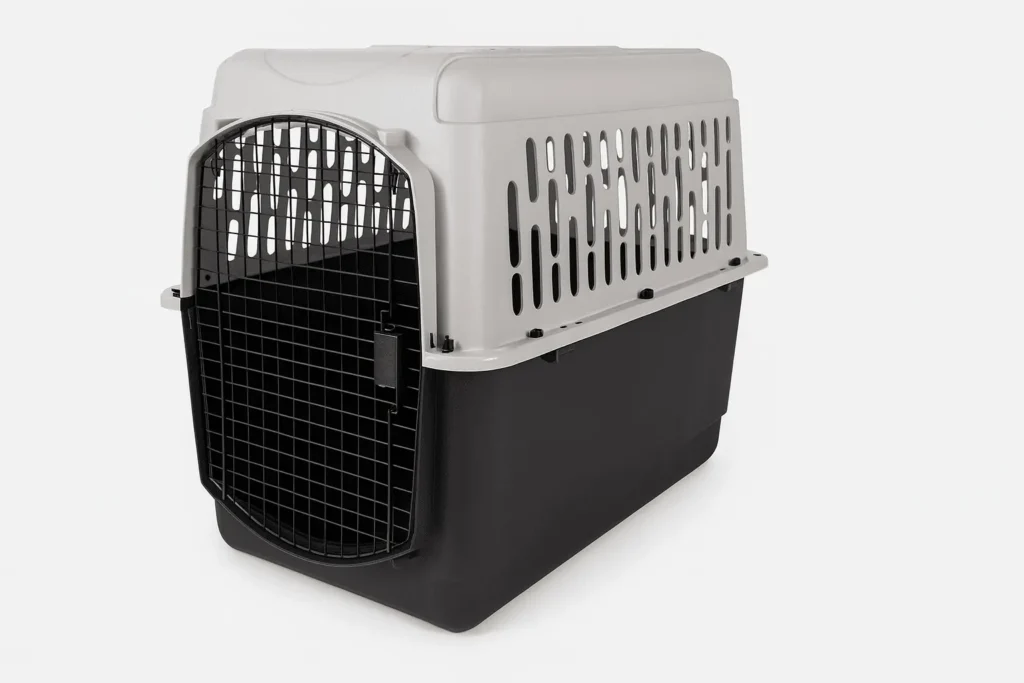
Plastic or airline-approved crates are perfect for travel – especially if you plan to fly or drive long distances with your Labrador Retriever.
Advantages:
- Solid and enclosed design offers a greater sense of security.
- Complies with IATA (International Air Transport Association) guidelines for air travel.
- Easy to carry, stack, and store.
- Provides warmth and protection during cooler weather.
Always double-check your airline’s specific crate requirements – some airlines require metal bolts, ventilation on all sides, and water containers inside.
Soft-Sided Crates
Soft-sided crates are lightweight and collapsible, making them great for short trips or indoor lounging.
Advantages:
- Lightweight and easy to carry.
- Comfortable fabric design – ideal for relaxed, trained Labs.
- Folds flat for storage or travel convenience.
Best for: Calm adult Labradors, temporary setups, and indoor naps.
Not for: Puppies or Labs with separation anxiety – they can easily tear through the fabric.
Heavy-Duty Metal Crates
Some Labradors are strong, playful, or anxious – and standard wire crates may not be enough.
For them, heavy-duty metal crates are the safest and most secure option.
Advantages:
- Made from reinforced steel or aluminum.
- Escape-proof design with secure locks.
- Excellent for powerful chewers or dogs with anxiety.
- Long-lasting and durable investment.
Wooden or Furniture-Style Crates
If you want your Labrador’s crate to blend into your home decor, wooden crates or furniture-style designs can be a great choice.
Advantages:
- Doubles as a side table or furniture piece.
- Stylish and blends into modern interiors.
- Comfortable and spacious for relaxed Labradors.
Best for: Adult Labradors who are calm and house-trained.
Not for: Chewers or untrained puppies (wood can be damaged easily).

Conclusion: Finding the Perfect Crate for Your Labrador Retriever
Choosing the right crate size for your Labrador Retriever is more than just a measurement – it’s about comfort, safety, and peace of mind for both you and your dog. From lively puppies to calm seniors, every stage of a Labrador’s life benefits from a crate that fits just right.
You can also read: How To Choose the Right Crate Size for Your Dog or Puppy
You can also read: Are German Shepherds Winter or Summer Dogs?