Your German Shepherd puppy’s playful nips might seem harmless at first – until those sharp little teeth start leaving marks on your hands, furniture, and clothes. Don’t worry – this behavior is completely normal in young German Shepherds.
However, if not corrected early, this playful biting can turn into a lifelong habit that’s hard to break. In this step-by-step tutorial, you’ll learn why German Shepherd puppies bite, how to teach bite inhibition, and positive training methods that build trust while curbing unwanted behavior.
Understanding Why German Shepherd Puppies Bite
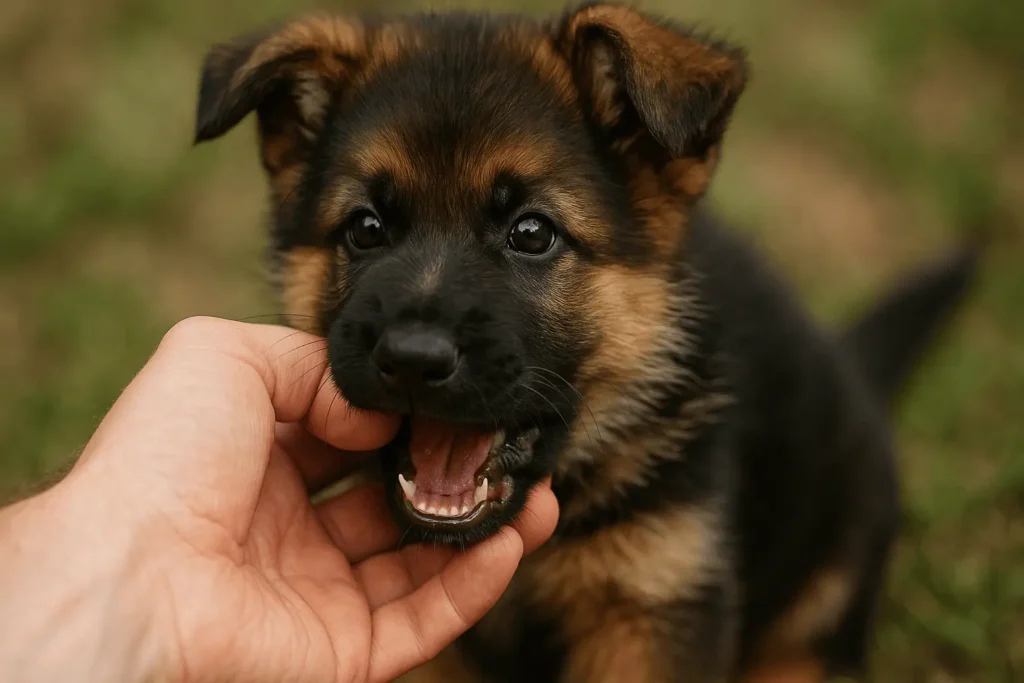
Before you can teach your German Shepherd puppy to stop biting, it’s important to understand why they do it.
Teething and Discomfort
Just like human babies, German Shepherd puppies go through a teething stage between 3 and 6 months old. Their gums feel sore, and chewing or biting provides relief. During this period, they may nip your fingers, shoes, or furniture simply to ease the discomfort.
Play Behavior and Social Learning
In a litter, puppies play-bite each other to learn limits. If one bites too hard, the other yelps and ends the play – teaching bite inhibition. When your puppy comes home, you become part of that learning process.
Herding Instincts
German Shepherds were bred as herding dogs. That means nipping at ankles or hands can be an instinctive behavior – it’s how they would control livestock.
Overexcitement or Lack of Self-Control
Puppies often bite when they get overstimulated during playtime or when greeting people. They haven’t yet learned how to express excitement appropriately.
Attention-Seeking Behavior
Sometimes, your puppy bites not out of play but to get your attention. Even a negative reaction like yelling or pushing away can reinforce the behavior – because any attention feels like a reward.
Step-by-Step Training to Stop Biting
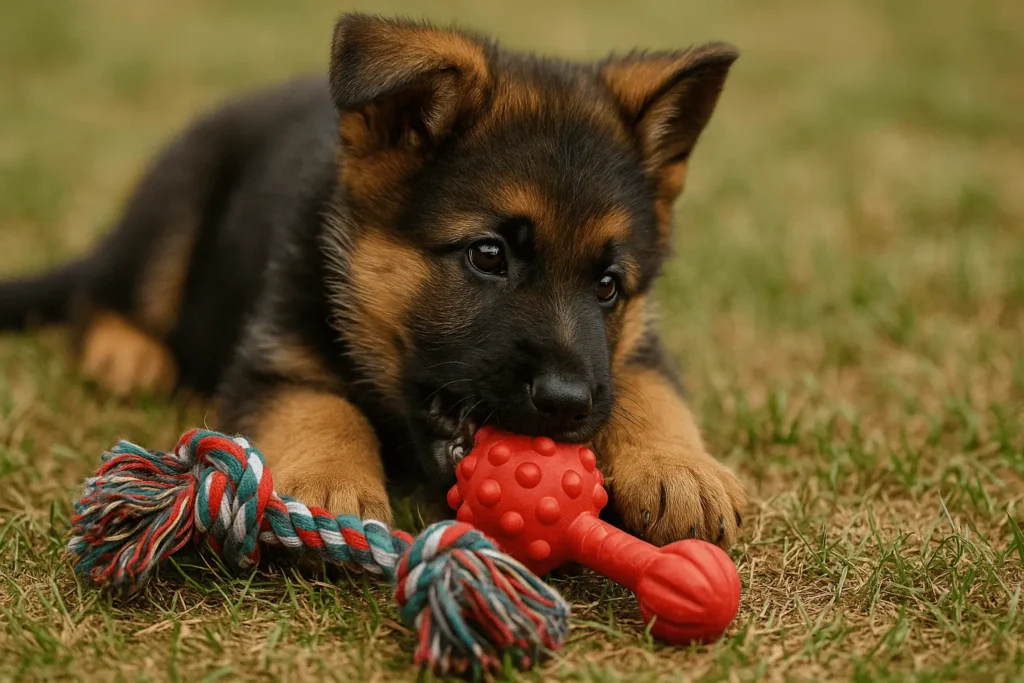
Now that you understand why your German Shepherd puppy bites, it’s time to teach them how to stop. These proven, positive techniques help your pup learn that gentle play earns attention – not sharp teeth.
Step 1: Teach Bite Inhibition Early
Bite inhibition is your puppy’s ability to control the pressure of their bite. Puppies naturally learn this from littermates, but when they join your home, you take over that role.
When your German Shepherd bites too hard during play:
- Say a clear, calm “Ouch!” or “No bite!”
- Stop interacting immediately and turn away for a few seconds.
- When your puppy calms down, resume play.
Begin bite inhibition training as soon as your puppy comes home – ideally between 8 and 12 weeks of age.
Step 2: Redirect Biting to Appropriate Toys
Puppies need to chew. The goal here isn’t to stop chewing but to teach what to chew.
- Keep a few durable chew toys (rubber chew toys, rope tugs) or teething rings within reach.
- When your puppy starts mouthing your hands or clothes, calmly say “No” and offer a toy instead.
- Praise and reward when they bite the toy.
Pro Tip: Rotate toys regularly so your puppy doesn’t get bored. You can even freeze some teething toys to ease sore gums.
Step 3: Use the Time-Out Method
If redirection doesn’t work and the biting continues, use a short time-out. This teaches your German Shepherd that biting ends all fun.
- Calmly say “Enough” and walk away from your puppy for 20 – 30 seconds.
- Do not yell, push, punish or use shock collars – your calm withdrawal is the consequence.
- After the break, return and reward calm behavior with attention or play.
Step 4: Reinforce Good Behavior with Rewards
Positive reinforcement works best for German Shepherds because they’re highly intelligent and eager to please.
- Reward your puppy with small treats or affection when they play gently.
- Say commands like “Gentle” or “Good calm” when rewarding to associate the words with desired behavior.
- Reward calm interactions every time for at least a few weeks.
Tips: Praise or treat immediately after calm behavior – don’t wait more than 2 seconds. This timing helps them connect the reward with the right action.
Step 5: Socialize and Expose Gradually
- Introduce your puppy to new people, dogs, and environments slowly and safely.
- Let them observe how calm dogs behave.
- Reward good manners during each new encounter.
Training a German Shepherd puppy to stop biting doesn’t happen overnight. Stick to short, 10 – 15 minute sessions a few times a day. Keep a balance of play, rest, and training to avoid overstimulation.
Common Mistakes to Avoid When Training
Allowing Rough Play with Hands
It might seem harmless to let your puppy nip at your fingers during play, but it sends the wrong message. They’ll learn that biting skin is acceptable.
Inconsistency Among Family Members
If one person allows biting during play while another scolds the puppy for it, your German Shepherd won’t understand the rule. Inconsistency confuses them and delays learning.
Skipping Mental and Physical Exercise
German Shepherd puppies have high energy and strong working instincts. If they don’t get enough exercise or mental stimulation, they’ll find ways to release energy – often through biting or destructive chewing.
Make sure your puppy gets:
- Physical Exercise: At least 45 – 60 minutes daily – split between two walks and one short play or fetch session.
- Mental Stimulation: Around 20 – 30 minutes daily through training drills, puzzle toys, scent games, or obedience tasks.
Extra Tips for Success
Tire Them Out Before Training
A bored or under-exercised German Shepherd is more likely to bite out of pent-up energy. Before obedience or play sessions, take your puppy for a short walk or play fetch for 10 minutes.
Avoid Rough or Hand-Based Play
Don’t wrestle, wave your hands, or play chase games with your body. These trigger your puppy’s herding and prey instincts.
Encourage Calmness Before Play
Many biting incidents happen when puppies get overexcited. Before starting a game, make your puppy sit calmly for a few seconds.
Manage the Environment
If your puppy tends to bite during high-energy moments (like visitors arriving), set up a safe playpen or gated area.
Add “Quiet Moments” After Play
End every play or training session with a few minutes of calm – soft petting, slow breathing, or sitting together quietly.
Fun Games to Build Bite Inhibition in German Shepherd Puppies
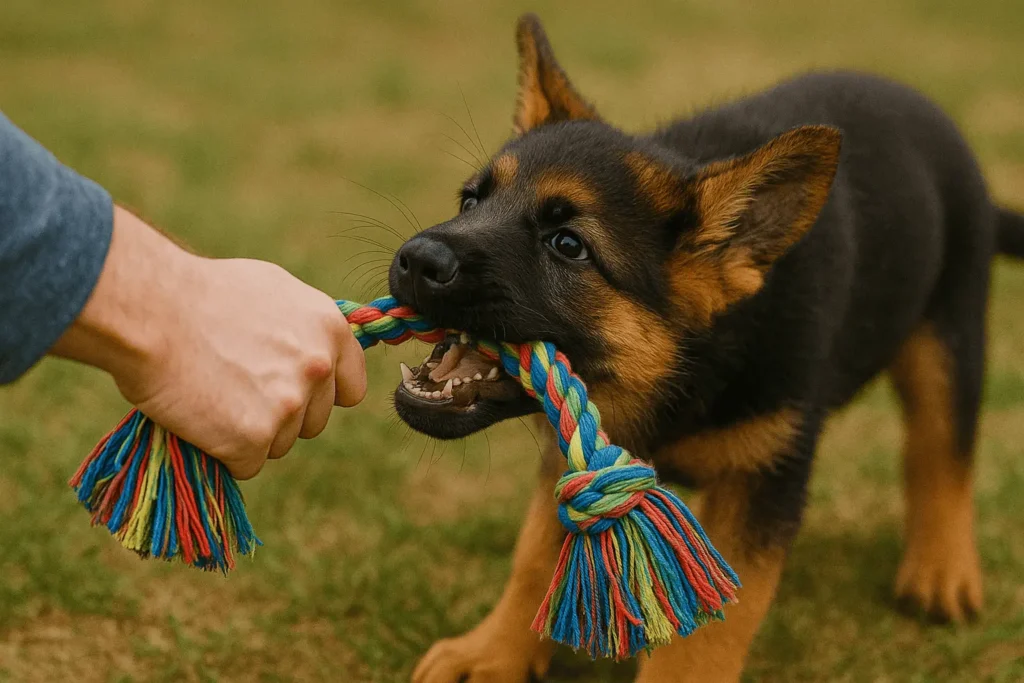
Tug-of-War
How to Play:
Use a sturdy rope toy and invite your puppy to grab it. Say “Take it” to start and “Drop it” to end. If they touch your hand with their teeth, stop the game immediately for a few seconds before restarting.
How It Helps:
This game teaches your puppy control and restraint, showing that rough mouthing ends the fun. It also reinforces the “Drop it” and “Gentle” commands naturally during play.
Fetch and Retrieve
How to Play:
Throw a ball or soft toy a short distance. Encourage your puppy to chase it and bring it back. Use commands like “Come” and “Drop it” when they return. Reward calm releases with praise or treats.
How It Helps:
Fetch redirects their urge to bite hands into a controlled activity. It strengthens obedience and helps them release energy in a healthy way, reducing boredom-related nipping.
Treat Puzzle Games
How to Play:
Use a treat-dispensing toy or stuff a Kong with peanut butter or kibble. Let your puppy figure out how to get the treats out using their mouth gently.
How It Helps:
Puzzle games satisfy their chewing instinct and promote mental focus, keeping them occupied and less likely to bite for attention.
Gentle Toy Trading
How to Play:
Offer your puppy one toy and, while they’re playing, present another more interesting toy or treat. Say “Drop it”, reward them when they let go, and give the new item.
How It Helps:
This game reinforces voluntary release and reduces possessiveness- key for bite inhibition and impulse control.
Follow-the-Leader
How to Play:
Walk slowly around the house or yard with treats in hand. Reward your puppy for walking beside you calmly without nipping at your legs or leash.
How It Helps:
This builds focus and self-restraint, teaching your puppy that calm behavior earns attention – not biting or grabbing.
Find It Game
How to Play:
Hide small treats or toys around the room and say “Find it!” Encourage your puppy to sniff and search using their nose.
How It Helps:
This mentally stimulating game channels energy into scent work, reducing mouthy behavior caused by boredom or excess energy.
Recommended Commands to Support Training
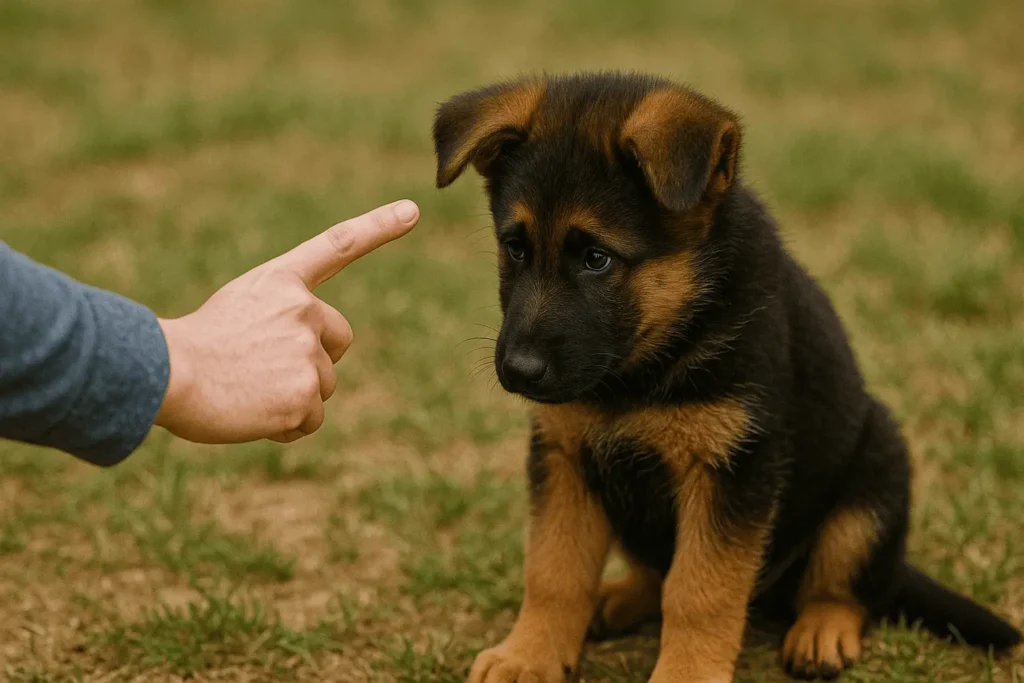
Sit
Purpose:
“Sit” helps your puppy pause and focus before interacting, reducing excitement that often leads to biting.
How to Train:
- Hold a small treat close to your puppy’s nose.
- Slowly move your hand upward – as their nose follows, their bottom will naturally lower.
- Once they sit, immediately say “Sit” and give the treat.
- Add praise like “Good sit!”
- Repeat in short sessions (5 – 10 times) daily until your puppy sits on command.
Stay
Purpose:
“Stay” prevents your puppy from jumping, lunging, or nipping when excited.
How to Train:
- Ask your puppy to sit first.
- Open your palm toward them (as a visual stop signal) and say “Stay.”
- Take one small step back. If your puppy stays in place for 2 – 3 seconds, say “Yes!” and reward.
- Gradually increase distance and duration over time.
- If your puppy moves, calmly return them to the same spot and try again.
Pro Tip: Always release with a cue like “Okay!” or “Free!” so your puppy learns when it’s time to move.
Leave It
Purpose:
“Leave it” teaches your puppy to resist the urge to bite or grab objects, hands, or toys.
How to Train:
- Hold a treat in your closed fist and let your puppy sniff or lick it.
- Wait patiently – don’t say anything.
- The moment they stop trying and look away, say “Leave it” and give a different treat from your other hand.
- Repeat until they understand that ignoring something earns a reward.
- Gradually use the command around real-life temptations (e.g., shoes, toys, or hands).
Pro Tip: Always reward with something better than what they’re leaving.
Drop It
Purpose:
Helps when your puppy grabs inappropriate items or refuses to let go.
How to Train:
- Start during play with a toy in their mouth.
- Hold a treat near their nose and say “Drop it.”
- When they release the toy to take the treat, praise immediately: “Good drop it!”
- Return the toy to them to show that giving up an item doesn’t mean losing it forever.
- Practice daily using different toys until they release on command – even without a treat.
Pro Tip: Never pull the item from their mouth.
Gentle
Purpose:
“Gentle” helps reduce bite strength during play or treat-taking. It’s especially helpful for puppies that nip hands or grab too hard.
How to Train:
- Offer a small treat in your open palm.
- If your puppy grabs roughly, close your hand and say “Gentle.”
- Reopen your hand after a few seconds and try again.
- When they take the treat softly, praise warmly: “Good gentle!”
- Repeat until your puppy associates the word “Gentle” with using a soft mouth.
Pro Tip: Use “Gentle” often during play or petting sessions.
Diet Tips to Reduce Biting Behavior in German Shepherd Puppies
While biting is mostly a behavior issue, your German Shepherd puppy’s diet plays an indirect but important role in how hyper, anxious, or calm they feel throughout the day. The right food plan supports balanced energy and a stable temperament – which means fewer biting incidents.
Feed a Balanced, High-Quality Puppy Diet
Choose a diet rich in protein (25 – 30%), healthy fats, and essential vitamins to support brain development and calm energy. Look for puppy formulas containing omega-3 fatty acids (DHA) – they promote better focus and learning during training.
Avoid Excessive Sugar or Carbohydrates
Low-quality kibble with fillers (like corn or wheat) can cause energy spikes and hyperactivity, making your puppy more prone to nipping or restless behavior. Opt for foods with real meat as the first ingredient and minimal artificial additives.
Maintain a Steady Feeding Schedule
Feed your puppy 3 – 4 smaller meals per day at regular times. Irregular feeding or hunger spikes can cause irritability or overexcitement, which may lead to biting out of frustration.
Include Natural Calming Snacks
Use treats or add-ins like:
- Frozen banana slices (soothe teething gums)
- Peanut butter–stuffed Kongs (keeps them busy)
- Carrot sticks or apple slices (safe, crunchy textures)
These not only satisfy chewing instincts but also promote calm, focused behavior.
Provide Proper Hydration
Dehydration can make puppies cranky or restless. Ensure fresh water is available 24/7, especially after play or training sessions.
Consult Your Vet for Supplements if Needed
If your puppy shows extreme hyperactivity or anxiety, ask your vet about supplements like L-theanine, melatonin, or fish oil (EPA/DHA) – these can naturally support calmness when paired with consistent training.
When to Seek Professional Help
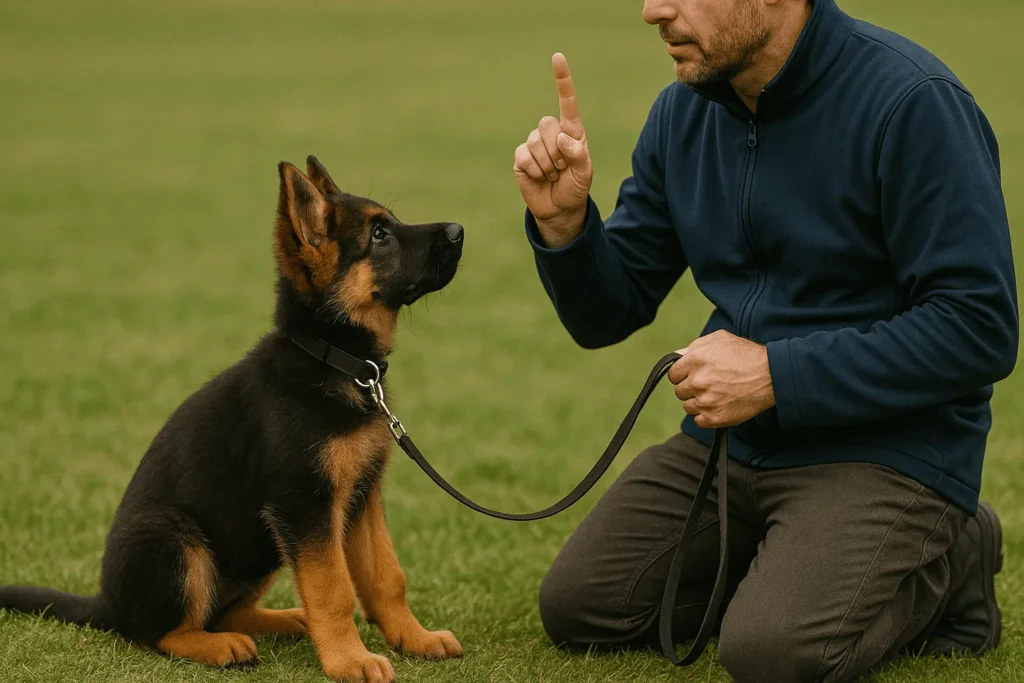
Even with the best home training, some German Shepherd puppies continue to bite excessively or show signs of aggression. Knowing when to involve a professional can prevent long-term behavior problems and keep both you and your puppy safe.
Signs That Biting Is Becoming a Serious Issue
- Frequent growling, lunging, or snapping during play or petting.
- Biting that draws blood or leaves bruises.
- Guarding toys, food, or spaces aggressively.
- Ignoring all redirection or time-outs after several weeks of consistent training.
- Showing fear or stress signs such as stiff body posture, tucked tail, or excessive barking.
If your German Shepherd puppy displays any of these, professional guidance can make a big difference.
Why a Professional Trainer Helps
Certified dog trainers or canine behaviorists understand breed instincts and body language deeply. They can:
- Observe subtle triggers you might miss.
- Design a personalized training plan for your puppy’s temperament.
- Use science-based, positive reinforcement methods.
- Help you correct your timing, tone, and reward system for faster results.
What to Expect in a Training Session
A professional may begin by evaluating your puppy’s routine, energy level, and social environment. Then they’ll guide you through exercises that teach impulse control, calm greetings, and gentle play.
Many trainers also offer puppy group classes, which double as socialization opportunities – helping your German Shepherd learn polite play around other dogs.
Choosing the Right Professional
Look for trainers certified by organizations like:
- IAABC (International Association of Animal Behavior Consultants)
- CCPDT (Certification Council for Professional Dog Trainers)
- APDT (Association of Professional Dog Trainers)
Read reviews, ask about their training philosophy, and ensure they focus on positive reinforcement methods rather than punishment.
When Veterinary Advice May Be Needed
Sometimes, excessive biting can be linked to pain or medical discomfort – such as teething issues, allergies, or injuries. If your puppy’s behavior changes suddenly or they bite when touched in specific areas, schedule a vet check-up to rule out health causes.
Consult Your Vet for Supplements if Needed
If your puppy shows extreme hyperactivity, restlessness, or anxiety, ask your vet about natural supplements such as L-theanine, melatonin, or fish oil (EPA/DHA). These can gently support calmness, focus, and emotional balance.
Conclusion & Call-to-Action
Training a German Shepherd puppy to stop biting takes time, patience, and consistency – but it’s absolutely achievable. Remember, biting is a normal stage in puppy development, not bad behavior. With the right mix of bite inhibition, redirection, rewards, and socialization, your puppy will quickly learn that gentle play earns your attention and love.
You can also read: How Often Should You Really Bathe a German Shepherd?
You may also read: Common Dog Behavior Issues
FAQs
At what age do GSD puppies stop biting?
Most German Shepherd puppies stop biting around 6 to 8 months old with proper training and socialization.
Is it okay to push a puppy away when biting?
No. Pushing your puppy away can excite or scare them, making biting worse. Instead, stay calm, say “No bite”, and stop interaction or redirect to a toy.