
When most people picture a service dog, they imagine a sturdy Labrador or a focused German Shepherd leading the way. So, the idea of a small, snub-nosed French Bulldog stepping into that role might seem surprising. Yet, this affectionate and intelligent breed has been quietly proving that size isn’t everything when it comes to service work.
In this article, we’ll explore whether French Bulldogs can truly be service dogs, the types of tasks they’re suited for, their limitations, and what to expect if you’re considering training your own Frenchie for service or emotional support.
Understanding What Makes a True Service Dog
Before deciding whether a French Bulldog can be a service dog, it’s important to understand what the term “service dog” really means.
What Is a Service Dog?
A service dog is a working animal, not a pet. Under the Americans with Disabilities Act (ADA), a service dog must be trained to carry out at least one essential task that mitigates its owner’s disability. These tasks can include guiding visually impaired people, alerting deaf owners to sounds, retrieving medication, or sensing anxiety or panic attacks before they escalate.
Core Qualities of an Effective Service Dog
- Calm temperament: The ability to stay composed in public spaces, even around distractions.
- Trainability: High intelligence and a willingness to learn repetitive, task-oriented behavior.
- Focus and patience: Service dogs must maintain attention for long periods without becoming reactive or anxious.
- Social stability: Comfort with crowds, children, other animals, and unfamiliar environments.
Can French Bulldogs Be Service Dogs?
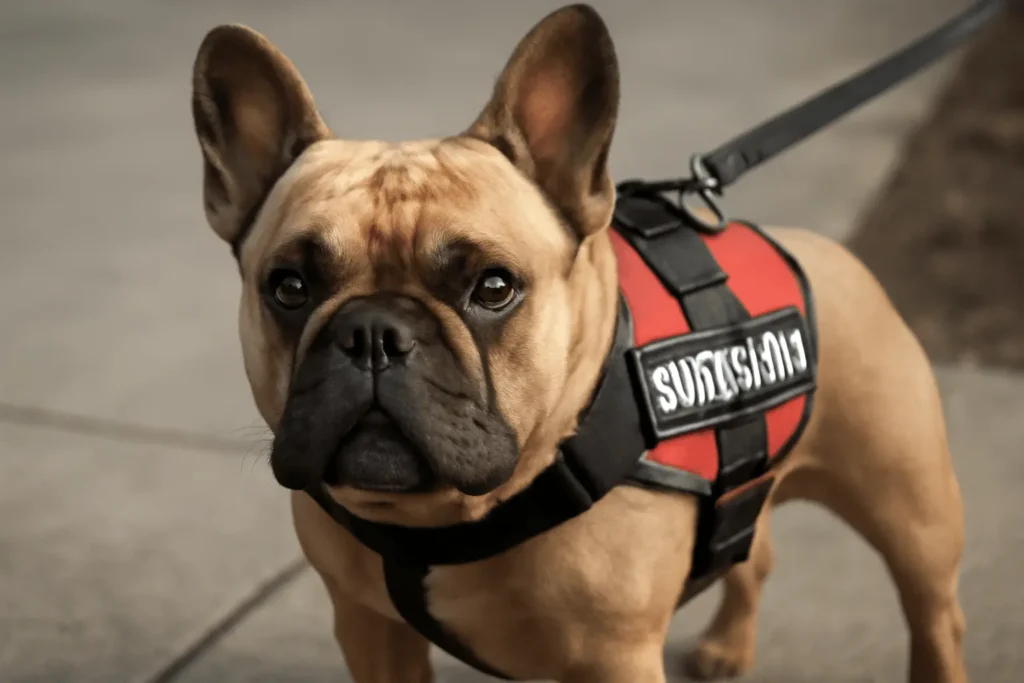
Yes, French Bulldogs can be service dogs, but with certain limitations. They can excel in psychiatric, emotional, and medical alert roles. French Bulldogs possess a unique mix of temperament and physical traits that make them surprisingly effective in the right kind of service work.
Compact and manageable size
French Bulldogs typically weigh between 16 and 28 pounds, making them easy to handle for individuals with limited mobility or living in small apartments. Their sturdy, muscular build gives them good balance and coordination, which helps them stay stable on laps or beside wheelchairs without feeling fragile.
Moderate energy level
Unlike high-energy breeds that require constant activity, Frenchies have a calm, adaptable energy. They’re alert and responsive without being hyperactive, making them well-suited for public environments like offices, hospitals, or airplanes where a calm demeanor is essential.
Quiet and low-barking nature
Service dogs must remain composed in public, and French Bulldogs are known for being quiet and non-disruptive. They rarely bark excessively, which helps them stay under control during travel, appointments, or therapy sessions.
Deep emotional intelligence
French Bulldogs have an uncanny ability to read human emotions – they sense tone, body language, and even mood changes. This empathy allows them to respond instinctively to stress, sadness, or anxiety, often by cuddling close or maintaining steady eye contact.
Loyal and people-oriented temperament
These dogs form strong attachments to their owners and thrive on companionship. Their devotion and need for human connection make them highly responsive to task-based training when it involves helping their handler directly.
Limitations of French Bulldogs as Service Dogs
Breathing Difficulties (Brachycephalic Issues)
French Bulldogs are a brachycephalic (flat-faced) breed, which means they’re prone to breathing problems, especially in hot or humid conditions. This can make it difficult for them to handle long working hours or physically demanding tasks.
Limited Stamina and Size
Their small, stocky build makes them less suitable for physically intensive assistance, such as guiding the visually impaired, pulling wheelchairs, or providing mobility support.
Sensitivity to Heat and Exhaustion
Due to their short snouts and compact bodies, they can easily overheat. This makes them less reliable in outdoor or high-activity service roles.
Potential Health Concerns
French Bulldogs are predisposed to conditions like hip dysplasia, skin allergies, and spinal disorders. These issues can affect their consistency and longevity as service animals.
Stubborn or Independent Nature
Although intelligent and affectionate, Frenchies can sometimes be stubborn or easily distracted. This may require extra patience and training consistency compared to more obedient working breeds.
Are French Bulldogs Legally Recognized as Service Dogs?
Yes – French Bulldogs can be legally recognized as service dogs under the Americans with Disabilities Act (ADA), as long as they meet one key requirement: they must be individually trained to perform specific tasks that assist a person with a disability.
Documentation and Certification
There’s no official U.S. registry for service dogs. However, handlers may choose to obtain certification or identification from recognized training programs to make travel or housing situations smoother.
Public Access Rights
A trained service dog, including a French Bulldog, has the legal right to accompany its handler in most public places, such as:
- Restaurants, stores, and hotels
- Public transportation and airplanes (depending on airline policies)
- Workplaces, schools, and public housing
Under the ADA, staff members can only ask two questions:
- “Is the dog required because of a disability?”
- “What task has the dog been trained to perform?”
They cannot ask for documentation, request demonstrations, or deny entry based on the dog’s breed.
Key Legal Distinctions
| Type of Animal | Training Required | Public Access Rights | Legal Recognition |
|---|---|---|---|
| Service Dog | Yes, specific tasks | Full public access | Recognized under ADA |
| Emotional Support Animal (ESA) | No specific task training | Limited (mostly housing, air travel) | Not ADA-recognized |
| Therapy Dog | Basic temperament training | Restricted to approved institutions | Not ADA-recognized |
French Bulldogs can be ESA or therapy dogs too, but those categories don’t carry the same legal rights as a true service dog.
Types of Service and Assistance Roles French Bulldogs Excel At

Psychiatric Service Dogs
With structured training, French Bulldogs can assist individuals with mental-health conditions such as PTSD, anxiety disorders, or panic attacks. They can be taught to:
- Interrupt harmful behaviors or repetitive actions.
- Apply gentle pressure or nudging during episodes of distress.
- Guide their handler away from triggering environments.
Medical Alert Dogs
- Detect shifts in scent or behavior linked to low blood sugar, fainting, or seizures.
- Alert their handler by pawing, barking softly, or fetching medication.
- Seek help from another person or activate an alert device if trained to do so.
Hearing Assistance Dogs
Though not as common as larger breeds, trained French Bulldogs can help people with partial or total hearing loss by:
- Responding to doorbells, alarms, or phone rings.
- Making physical contact to alert their owner, then leading them toward the sound source.
Mobility and Retrieval Assistance
For individuals who need light physical support, French Bulldogs can be trained to:
- Pick up small dropped items such as keys or remote controls.
- Deliver objects within reach.
- Provide steady companionship beside a wheelchair or walker.
Training French Bulldogs to Become Service Dogs
Start with Obedience and Socialization
Every great service dog begins with basic obedience training. Your French Bulldog should master essential commands like sit, stay, come, leave it, and heel. These commands create a foundation for more advanced task training.
How to Train Basic Commands
- Sit: Hold a small treat close to your dog’s nose, then slowly move it upward. As their head follows, their bottom naturally lowers. Once they sit, say “sit,” reward, and praise.
- Stay: Ask your dog to sit, then show your open palm and say “stay.” Take one step back, wait a moment, and return to reward if they remain still. Gradually increase the distance and duration.
- Come: Use a cheerful tone, kneel down, and say “come” while gently tugging a long leash or encouraging with a treat. Reward immediately when your dog reaches you.
- Leave it: Place a treat in your closed hand. When your dog sniffs or paws at it, say “leave it.” Once they stop, reward them with a different treat from your other hand.
- Heel: Walk forward with your French Bulldog on a leash beside you. Use treats to keep them near your leg, and say “heel” as they match your pace. Reward for staying aligned and focused.
Once your French Bulldog reliably follows basic obedience cues, you can move into advanced service-specific commands.
Advanced Training Commands for Service Work
- Touch: Teach your dog to gently touch a target (like your hand or a button) with their nose or paw. This forms the basis for tasks like pressing medical alert buttons or turning light switches on/off.
- Fetch or Take it: Train your dog to pick up small objects such as keys, medication bottles, or dropped items and bring them to you. Start with lightweight objects and use consistent cues.
- Alert: Use this command to signal when your French Bulldog notices a specific cue – like a timer, phone ring, or anxiety trigger. Pair the behavior (pawing or nudging) with the word “alert,” then reward.
- Deep Pressure: This task helps with anxiety or panic attacks. Teach your dog to gently lay across your lap or chest when asked, applying light pressure to help calm you.
- Find Help or Get [Person’s Name]: Useful for medical emergencies. Train your dog to locate a family member or caregiver and lead them back to you.
- Block or Create Space: For individuals with PTSD or social anxiety, train your dog to stand in front of or behind you to create a comfortable buffer in crowds.
Socialization is equally important – expose your Frenchie to different people, sounds, and environments so they remain calm and confident in public settings such as stores, buses, and hospitals.
Work with Certified Trainers
If you plan to have your French Bulldog officially recognized as a service dog, consider enrolling in a professional training program that follows ADA and Assistance Dogs International (ADI) guidelines. These trainers can assess your dog’s temperament, teach advanced task-specific skills, and prepare them for public access tests.
Always use Positive Reinforcement
French Bulldogs respond best to gentle encouragement and rewards rather than punishment. Treats, praise, and playtime help reinforce desired behaviors. Harsh corrections can make them anxious or stubborn, reducing training effectiveness.
Consistency Is Key
Short, focused training sessions (10 – 15 minutes) multiple times per day are more effective than long, tiring ones. Consistency helps your French Bulldog understand expectations and maintain engagement.
Overcoming Common Challenges
Dealing with Stubbornness
French Bulldogs are intelligent but can be independent thinkers. If they sense inconsistency or lack of motivation, they may resist commands.
Solution: maintain a calm but firm tone. Celebrate small wins and avoid repeating commands too often, as this can lead to frustration or disinterest.
Handling Sensitivity to Tone and Environment
French Bulldogs don’t respond well to harsh corrections or loud voices – it can make them anxious or shut down.
Solution: Keep your training environment calm, and reward good behavior immediately
Addressing Physical Limitations
Bulldogs can tire easily, especially in heat or humidity.
Solution: Schedule training in cool, well-ventilated areas, and keep physical tasks light. Prioritize mental stimulation over strenuous activity.
Socialization Challenges
Without early exposure, French Bulldogs may become overly attached to one person or wary of strangers.
Solution: Gradually introduce them to various people, sounds, and environments during puppyhood.
Conclusion
So, can French Bulldogs be service dogs? Absolutely – as long as they’re trained for the right kind of work. They may not have the muscle to guide the blind or pull wheelchairs, but what they lack in size, they more than make up for in heart, intuition, and emotional awareness.
You may also like: Most Popular Service Dog Breeds
You may also like: What Treats Do French Bulldogs Like?