If you share your home with a German Shepherd, you already know how quickly their beautiful coat can go from gleaming to grimy – especially after a long walk, a romp in the park, or a good roll in the mud. But when it comes to bath time, many owners ask the same question: “Can I bathe my German Shepherd once a month?”
In this guide, we’ll explore how often you should bathe your German Shepherd, what factors affect their grooming schedule, and the best techniques to make bath time safe and stress-free.
Understanding a German Shepherd’s Coat
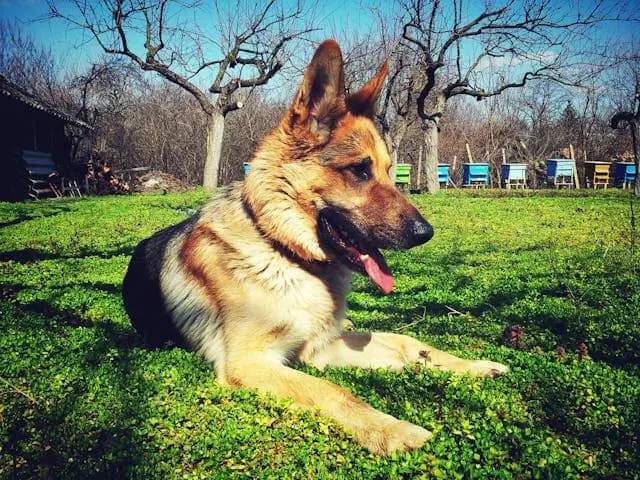
Before deciding how often to bathe your German Shepherd, it’s essential to understand what makes their coat so special – and why it plays a huge role in determining the right grooming routine.
German Shepherds are double-coated dogs, meaning they have two distinct layers of fur: an undercoat and a outercoat. The outer coat consists of thick, straight guard hairs that repel dirt, moisture, and debris, while the undercoat is soft, dense, and designed to trap air for insulation. Together, they act like nature’s built-in climate control system, keeping your Shepherd cool in summer and warm in winter.
Because of this natural protection, over-bathing can do more harm than good. Frequent baths strip away the oils (Sebum, Linoleic Acid, Alpha-Linolenic Acid, Ceramides and Cholesterol & Wax Esters) that keep the coat moisturized, glossy, and self-cleaning, leading to dryness, dandruff, or even itching.
Can I Bathe My German Shepherd Once a Month?
So, can you bathe your German Shepherd once a month? The short answer is – it depends on your dog’s lifestyle, coat condition, and environment.
Most German Shepherds do well with a bath every 6 to 10 weeks, but bathing once a month can be perfectly fine under certain circumstances. What matters most is your dog’s skin health and how dirty or oily their coat gets between baths.
If your German Shepherd lives mostly indoors, doesn’t roll around outdoors often, and has no skin issues(dry or sensitive skin), bathing every two to three months is typically enough. Their natural coat oils help maintain a healthy shine and act as a natural barrier against dust and bacteria.
When Not to Bathe Too Frequently
- Cold or Dry Climate: Frequent baths in low humidity remove moisture from the coat, leading to static and dullness.
- Coat Already Feels Soft and Balanced: A clean, shiny, and non-greasy coat means their natural oils are doing their job – no need for another bath yet.
- Heavy Shedding Period: During shedding, daily brushing removes loose fur more effectively than bathing.
However, if your Shepherd spends a lot of time outside, swims frequently, or has a naturally oily coat, a monthly bath can help control odor, remove buildup, and keep their fur fresh.
Other Situations Where Frequent Baths Are Beneficial
- Rainy or Humid Climate: In damp weather, monthly baths help prevent musty odor and skin bacteria buildup.
- Allergy-Prone Dog: Regular medicated baths help relieve itching and wash away pollen or allergens.
- Multi-Pet Homes: Regular baths reduce dander and help keep the whole household cleaner, especially if you have cats or small children.
Special Situations
When You Should Completely Avoid Bathing Your German Shepherd
- After Surgery or Vaccination: Wait at least a week – water or shampoo can irritate healing spots.
- When Sick or Weak: Skip baths if your dog has fever, diarrhea, or loss of energy.
- With Skin Wounds or Infections: Avoid water and use vet-prescribed wipes instead.
- After Flea or Skin Treatments: Don’t bathe for 48 hours before or after application.
When You Should Bathe Your German Shepherd No Matter the Frequency
- After Contact with Chemicals or Toxins: If your dog rolls in engine oil, paint, or cleaning agents, bathe them immediately with mild shampoo and rinse thoroughly.
- After Rolling in Feces or Carcasses: These can cause bacterial infections and strong odors – a full bath is a must.
- After Exposure to Sea Salt or Pool Chlorine: Rinse and bathe to remove salt or chlorine that can dry out the coat and skin.
Bathing Frequency by Life Stages for German Shepherds
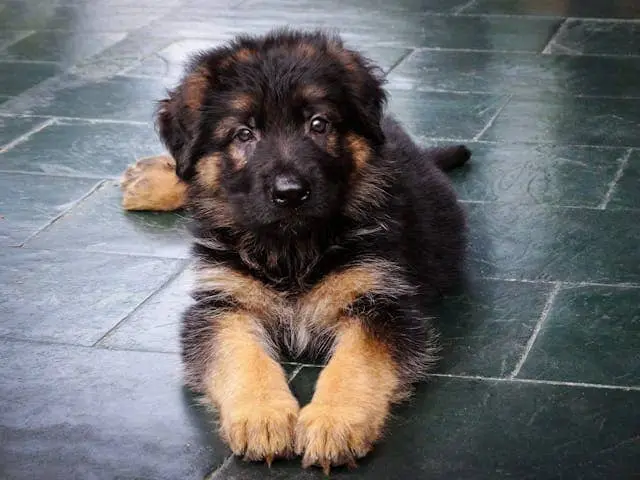
German Shepherd Puppies
Once every 6 – 8 weeks, or only when visibly dirty. Puppies produce fewer natural oils, so frequent bathing can strip away what little protection they have.
- Always use a gentle, puppy-formulated shampoo with no fragrance or harsh chemicals.
- Make sure the puppy is at least 8 weeks old before their first full bath.
Senior German Shepherds
Every 8 -10 weeks, or as needed for cleanliness and odor. Frequent bathing can worsen dry skin and discomfort, especially if they have arthritis or mobility issues.
- Keep bath sessions short
- Apply a moisturizing or oatmeal-based conditioner to help protect their skin.
Pregnant German Shepherds
Only when necessary – ideally once every 2–3 months or as advised by your vet. Hormonal changes can make their skin more sensitive, and too much handling may cause anxiety.
- Avoid slippery surfaces and lifting the dog’s belly during bathing.
- Use mild, unscented shampoos or veterinarian-approved products.
- If bathing is stressful, use wet wipes or a damp cloth for gentle cleaning instead.
Lactating German Shepherds
Spot clean as needed; a full bath only after weaning (unless medically necessary). Bathing too soon may stress the mother or expose the puppies to residual shampoo or moisture.
- Wipe the belly and legs gently with warm, damp cloths after nursing sessions.
- Ensure the coat stays dry and free of bacteria, especially around the mammary area.
- If odor develops, consult a vet for safe cleaning alternatives.
Bathing Frequency for Long-Haired vs Short-Haired German Shepherds
Bathing frequency can also vary slightly depending on coat length:
- Long-Haired GSDs: Need baths a bit more often – about every 4 – 6 weeks – since their longer fur traps more dirt, moisture, and odor.
- Short-Haired GSDs: Can go longer – around 6 – 10 weeks – because their shorter coat sheds dirt more easily and dries faster.
Signs of Over-Bathing and Under-Bathing in German Shepherds
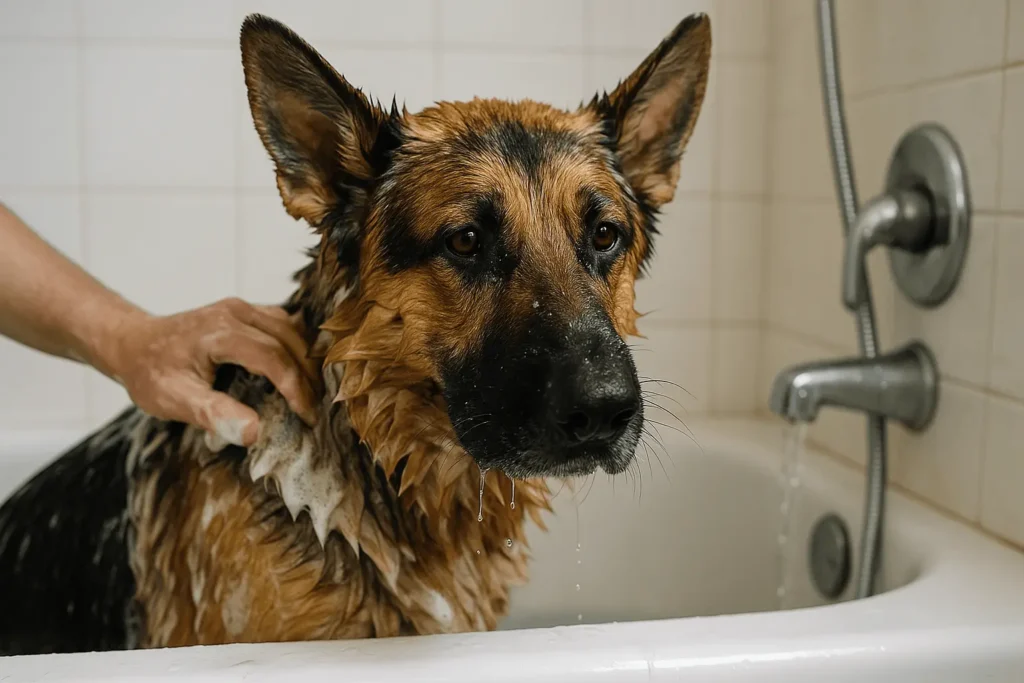
Signs of Over-Bathing
- Dull, Brittle Coat: The fur may lose its shine, feel coarse to touch, or appear faded.
- Increased Sensitivity: The skin may become red, tight, or inflamed – especially around the belly and armpits.
- Loss of Natural Odor Balance: Paradoxically, over-bathing can make your dog smell worse because the skin overproduces oil to compensate.
Signs of Under-Bathing
- Dirt and Debris Buildup: Visible dirt trapped near the undercoat or along the belly area.
- Dandruff and Shedding Increase: A dirty coat traps dead skin cells and loose fur, leading to excess shedding.
- Skin Irritation or Hot Spots: Neglected dirt and bacteria can cause small rashes or infections over time.
How to Bathe Your German Shepherd the Right Way
Even if you’ve decided that bathing your German Shepherd once a month works for their lifestyle, how you bathe them is just as important as how often.
Tools You’ll Need to Bathe Your German Shepherd
- Undercoat Rake or Slicker Brush – To remove loose hair and tangles before the bath.
- Dog-Safe Shampoo and Conditioner – Choose gentle, pH-balanced products made for double-coated breeds only.
- Dilution Bottle or Mixing Cup – Allows you to mix shampoo with water so it spreads more easily through the dense fur.
- Handheld Shower Head or Hose Attachment – Helps rinse thoroughly through the thick undercoat and prevents soap residue.
- Bath Mat or Non-Slip Surface – Keeps your dog steady and prevents slipping during the bath.
- Grooming Gloves or Soft Sponge – Useful for massaging shampoo into the undercoat without irritating the skin.
- Absorbent Towels or a Microfiber Drying Towel – For quick drying before using a blow dryer.
- Pet-Safe Blow Dryer (Low Heat) – Essential for drying deep into the undercoat.
- Treats and Gentle Leash/Collar-– Keeps your dog calm and cooperative during bath time.
Step-by-Step Bathing Process
- Brush the Coat (5 – 10 minutes) – Use an undercoat rake or slicker brush to remove tangles and loose fur before the bath. This ensures water and shampoo reach deep into the undercoat.
- Prepare the Bath Area (2 – 3 minutes) – Set up your shampoo, towels, and blow dryer nearby. Place a non-slip mat to keep your dog stable.
- Wet the Coat Thoroughly (3 – 5 minutes) – Use lukewarm water and a handheld shower head to fully soak the coat, especially the dense undercoat. Work slowly from the neck down to the tail.
- Apply Diluted Shampoo (3 – 5 minutes) – Mix shampoo with water and gently massage it into the coat using circular motions. Avoid the eyes and ears. Let it sit for about 2 minutes before rinsing to loosen dirt and oil.
- Rinse Completely (5 – 7 minutes) – Rinse thoroughly until the water runs clear. Leftover shampoo can cause itchiness or dandruff.
- Apply Conditioner (Optional, 2 – 3 minutes) – For dry or coarse coats, apply a dog conditioner and let it rest for 1 – 2 minutes before rinsing again.
- Towel Dry the Coat (5 minutes) – Gently pat the coat with an absorbent towel or microfiber cloth to remove excess water. Avoid rough rubbing, which can tangle the fur.
- Blow Dry on Low Heat (10 – 15 minutes) – Use a pet-safe blow dryer or high-velocity dryer on a low, cool setting. Dry the coat completely, brushing through to prevent damp spots and matting.
Between Baths – Keeping Your German Shepherd Clean
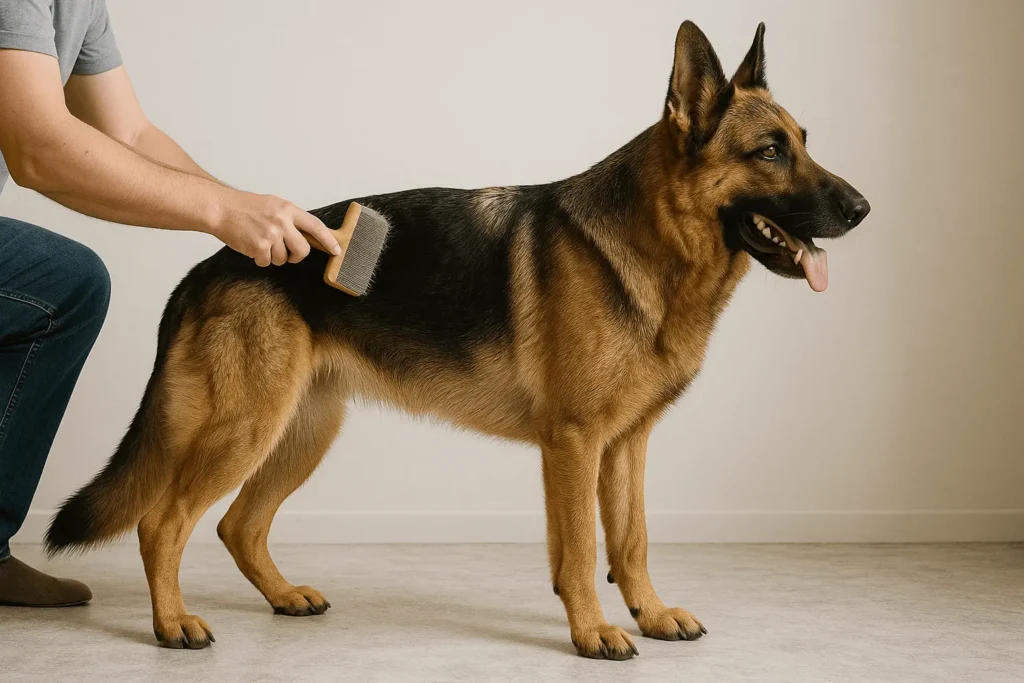
The secret to keeping German Shepherd’s coat healthy and fresh lies in what you do between those baths. Regular upkeep reduces odor, controls shedding, and helps your dog stay clean without over-bathing.
Regular Brushing
Brushing is the single most effective way to maintain your German Shepherd’s coat between baths. Aim to brush at least 3 – 4 times a week using a slicker brush or undercoat rake. Brushing removes loose fur, dirt, and debris, distributes natural oils evenly, and prevents tangles from forming in the dense undercoat.
Use Wipe-Downs or Dry Shampoo
For quick clean-ups after outdoor play, use dog-safe grooming wipes or dry shampoo sprays. These help remove surface dirt and refresh your dog’s coat without needing a full bath. Focus on areas that tend to get dirty faster – paws, belly, and under the tail.
Clean Ears and Eyes Gently
German Shepherds are prone to ear buildup, especially if they have floppy ears. Use a vet-approved ear cleaner once a week to prevent wax and moisture from causing infections. You can also wipe around the eyes gently with a soft, damp cloth to remove tear stains or dust.
Keep Bedding and Grooming Tools Clean
Wash your dog’s bedding every two weeks and clean grooming brushes regularly. A clean sleeping area and tools prevent odors and bacteria from transferring back to your dog’s coat.
Conclusion
So, can you bathe your German Shepherd once a month? The answer depends on your dog’s lifestyle, coat condition, and environment – but with the right products and technique, a monthly bath can be perfectly healthy.
You may also like: Are German Shepherds Winter or Summer Dogs?
You may also read: How Often Should You Bathe Your Dog?
FAQs
Do German Shpeherds love bathing?
Most German Shepherds don’t naturally love baths, but they can learn to enjoy them with gentle handling and positive reinforcement. Starting early, using warm water, and rewarding with treats helps make bath time a calm and pleasant experience.
How can I keep my German Shepherd smelling good apart from bathing and brushing?
Wash their bedding weekly. Use dog-safe deodorizing sprays or dry shampoo for quick refreshes.